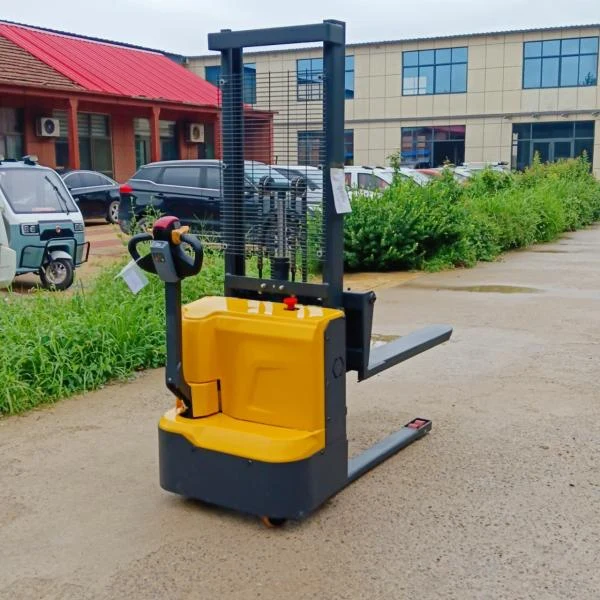
Electric stackers handle pallets and stack goods in warehouses and workshops. Consistent operating practice protects people, racks and equipment while supporting an orderly workflow. Operators should be trained for the truck they use and understand its manual, capacity plate and site rules.
1. Check before starting
Inspect the forks, mast, chains, wheels, controls and visible cables for damage, looseness or leaks. Check the battery indicator and fault messages. Test the brakes, horn, emergency stop and anti-crush device as directed by the manual. Remove a faulty truck from service and report it before continuing work.
2. Keep travel under control
Starting methods, tiller operating zones and directional controls vary by model. Check that the route is clear, then accelerate smoothly. Slow down at corners, narrow aisles, crossings and obstructed views. Look in the direction of travel and allow stopping space. With a pedestrian truck, avoid standing between the truck and a wall or rack.
3. Lift and stack stable loads
Check the pallet, load weight, load centre and intended lift height against the truck’s permitted capacity. Insert the forks fully and balance the load. Check overhead clearance before lifting and stop the truck before positioning a load. Keep people off the forks and away from raised loads. Travel at the low fork position specified in the manual.
4. Understand the safety controls
Emergency stops and anti-crush buttons differ between models. Learn their function and check them as instructed. They support attentive operation and adequate clearance; do not bypass or alter them.
5. Park securely
Choose a designated level area clear of exits and access routes. Lower the forks to the prescribed safe position, neutralise the controls, apply the parking brake and switch off. Remove the key where fitted and confirm the truck cannot move unexpectedly.
6. Charge the correct way
Use the approved charger for the battery type and follow the manufacturer’s procedure in a designated charging area. Maintain the required ventilation and keep ignition sources away. Stop charging and arrange service if cables, plugs, temperatures or alarms indicate a fault. Battery connection, disconnection and maintenance require trained, authorised personnel.
7. Care in wet conditions
- Park in a dry, ventilated area and shut down as instructed before cleaning.
- Clear water, oil and slippery contamination from the route; do not drive through standing water or use the truck in rain unless approved for it.
- If water enters the battery, charger or electrical system, stop use and charging and request a service inspection. Do not touch or wipe live parts.
Keep inspection and maintenance records. The specific truck manual remains the reference for load limits, gradients, operating conditions and service intervals.